Green Cleaning That Works: HEPA Vacuums and Microfiber Versus a Label
A green label on a spray bottle tells you very little, while the equipment in the cleaner's cart tells you a lot.
October 26, 2026 · 3 min read
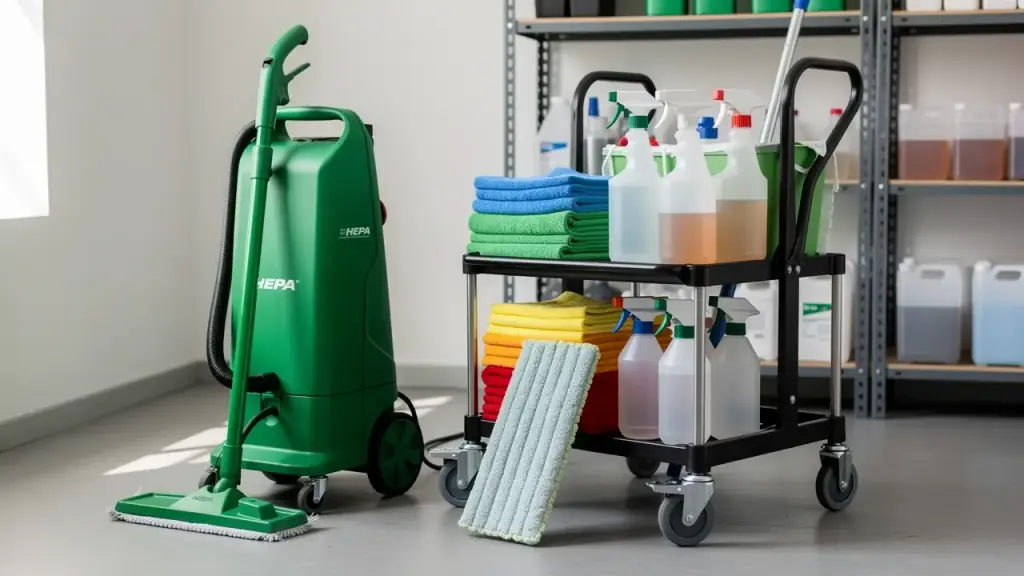
When people ask for green cleaning, they usually mean products that are gentler on the people in the building and on the environment. That's a good goal. But the bottle is only part of the story. A crew can use the mildest cleaner on the shelf and still leave a room dusty, because the vacuum blows fine particles back into the air and the cloth just pushes dirt around. If you manage an office, a clinic waiting area or a school hallway in Pineville or Alexandria, it's worth looking at the tools, not only the labels.
A label doesn't tell the whole story
Words like natural, eco and plant-based are marketing terms. They aren't measurements. Some products with those words work well, and some barely clean at all, which leads crews to use more of them, scrub harder, or go over a surface twice. That defeats the purpose. A better question to ask a cleaning company is simple: what are you actually going to use in my building, and why? A good answer names specific products and equipment, and explains how they reduce what ends up in the air and on the surfaces.
What a HEPA-filter vacuum changes
A regular vacuum pulls air through a filter, and fine dust can pass right through it and back out the exhaust. A HEPA filter is built to catch much finer particles, such as the dust, pollen and pet dander that settle in carpet and upholstery. The filter is only half of it. The machine also needs a sealed body, so the air really goes through the filter instead of leaking around the edges. That's why a HEPA vacuum is a better fit for places where people spend long hours or have sensitivities: offices with carpet, waiting rooms, classrooms and homes where someone has allergies.
You'll also notice the difference the day after cleaning. A building that has been vacuumed with a poor machine often smells dusty by the next morning, and the surfaces have a fresh layer of fine dust. With a sealed HEPA machine that tends to be much less noticeable.
Why microfiber needs less product
Microfiber cloths are made of very fine, split fibers. Those fibers pick up and hold dust and dirt, rather than smearing it around the way an old cotton rag does. Because of that, a lot of everyday cleaning, like wiping a desk, a counter or a glass partition, needs only water or a small amount of cleaner. Less product means less residue left on the surface, less chemical smell, and fewer bottles to store and dispose of.
Microfiber does have habits you should know about. It works best when it's clean, so a crew should carry enough cloths to swap them out and not wipe the whole building with one. Color coding is a good sign: one color for restrooms, another for general surfaces, another for glass. That keeps restroom germs from traveling to the break room table. Microfiber also shouldn't be washed with fabric softener, which clogs the fibers and ruins the way they grab.
Where green cleaning has limits
It's worth being honest about this part. Some jobs need a stronger product. A restroom floor, a greasy kitchen exhaust or a heavily soiled warehouse floor may need something with more punch than a mild cleaner. Disinfecting is a different task from cleaning, and some situations call for a disinfectant regardless of what the label says. A reasonable green program uses the gentlest product that works for each job, and stronger ones only where needed. If anyone tells you a single product handles everything, be skeptical.
Questions worth asking your cleaner
- Do you use HEPA-filter vacuums on carpet and rugs in my building?
- Do you use microfiber cloths and mops, and do you swap them out during the job?
- Which cleaners will you use in the restrooms and the break room, and can I see the labels?
- Can you adjust the products if someone in my office has a sensitivity?
- Will you use my own products if I prefer them?
TNT Enterprizes LLC offers green cleaning built around HEPA-filter vacuums and microfiber cloths, with products chosen so they won't harm the environment. The crew brings its own professional-grade products and equipment, and will use yours if you ask. That last point matters if you already have a product that works for your space or one a staff member needs you to avoid.
If you're weighing a green option for your office or building in Pineville, Alexandria or Lafayette, call (318) 880-1199 for a free, no-obligation estimate.
TNT Enterprizes LLC, (318) 880-1199
Call (318) 880-1199More articles
What a Small Office Janitorial Checklist Should Cover, Room by Room
Most offices say they want it clean without ever writing down what clean means, so here is the list a good crew works from.
After the Contractors Leave: What Post-Construction Cleaning Actually Involves
Construction dust settles into places a broom never reaches, and the order you clean in decides whether you do the job once or three times.