After the Contractors Leave: What Post-Construction Cleaning Actually Involves
Construction dust settles into places a broom never reaches, and the order you clean in decides whether you do the job once or three times.
October 26, 2026 · 4 min read
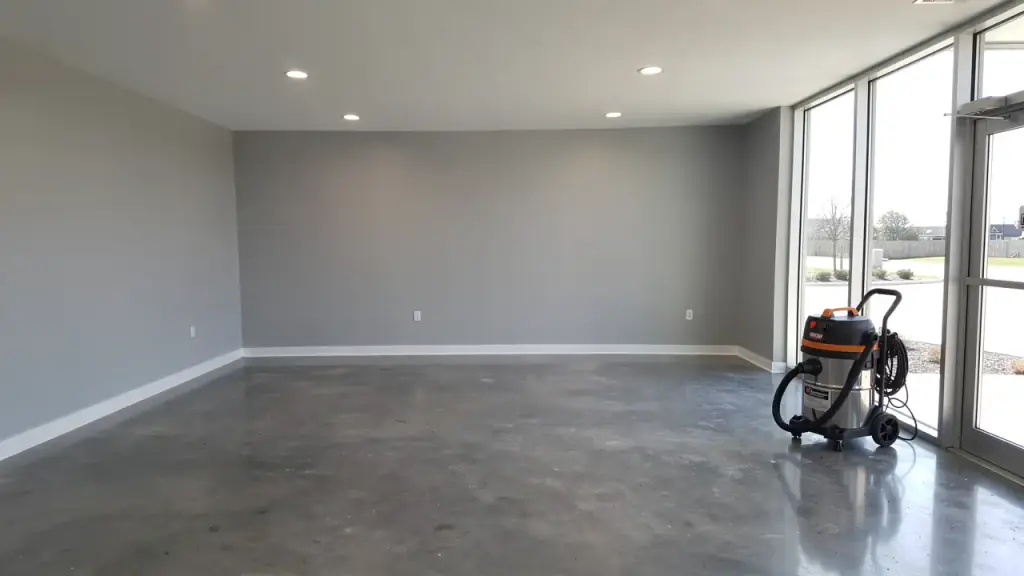
The contractors pack up their tools, the inspector signs off, and the space looks finished. Then you walk in with a flashlight, or just the afternoon sun through a window, and you see it: a gray film on every ledge, paint flecks on the floor, stickers still on the glass. Post-construction cleaning is its own kind of job. It's less about shine and more about removing material that was never meant to be in the building at all. Here is what's usually left, and the order that makes the work go right, whether the project was a new suite in Alexandria, a remodel in Pineville or a build-out in Lafayette.
What construction leaves behind
Start with the dust. Drywall dust is extremely fine, and it travels. It lands on tops of door frames, inside light fixtures, in the tracks of windows, and inside vents and ductwork. It also settles on outlets and switch plates. Beyond dust, you'll find larger debris like screws, offcuts, wire clippings and packaging, along with paint drips, caulk smears, tape residue and adhesive. New windows arrive with stickers and protective film. New appliances and fixtures come wrapped. Floors collect everything that falls, and by the end of the project they have been walked on by every trade.
Why the order matters
The rule is simple: work from the top down, and from dry to wet. Dust falls. If you mop the floor first and then dust the ceiling fixtures, you will be cleaning the floor twice. If you wipe damp surfaces before you've removed the loose dust, you turn that dust into a paste that smears and dries into a film. Most of the mistakes people make with post-construction cleaning come from getting this sequence backward.
The sequence a crew should follow
- Remove the large debris and trash first, so the vacuums and cloths aren't fighting it
- Vacuum and wipe the highest surfaces: ceilings, light fixtures, and the vents and ductwork openings
- Clean the walls, door frames, trim and ledges, removing paint specks and tape residue carefully so the finish isn't damaged
- Do the windows: take off stickers and residue, then clean glass and tracks
- Clean and sanitize the washrooms, kitchens and appliances, including the insides of cabinets and drawers
- Wipe outlets, switch plates and light fixtures
- Vacuum the floors with heavy-duty shop vacs, then mop hard floors and steam clean carpet where it needs it
- Take out the remaining trash and do a final pass
That list matches the way TNT Enterprizes LLC lays out its post-construction checklist: dirt, dust and debris with heavy-duty shop vacs, sanitizing the washrooms, kitchens and appliances, light fixtures and outlets, vents and ductwork, window stickers and residue, carpets steam cleaned where needed, ceilings and walls, and trash removal. The checklist is customizable, so if your project had a specific problem, like a lot of stone cutting or a floor that was sealed last week, it can be adjusted.
Vents and ductwork deserve a second look
This is the part owners skip because nobody can see it. If construction dust settles inside vents and the system turns on, that dust gets blown back into the room, and it will keep landing on your clean surfaces for weeks. Clean the vent openings and the visible parts of the ductwork as part of the job. If the heating and cooling system ran during construction without filters in place, it's smart to have the system's own contractor check it as well. That is outside what a cleaning crew should be expected to handle.
Timing the cleaning
The biggest scheduling mistake is cleaning too early. If the painters, flooring crew or electricians are still coming back for punch-list items, the space will get dirty again. Wait until the trades are done, then book the cleaning. It helps to walk the space with your contractor first and agree that the work is complete. Also tell the cleaning crew about any surfaces that are freshly sealed, freshly painted or still curing, so they don't treat them like seasoned ones.
Many owners do a two-stage approach on larger jobs. A rough clean happens before furniture and equipment move in, removing the bulk of the dust and debris. A final clean happens after, when everything is in place. It costs more time up front, but it protects new furniture and electronics from the worst of the dust.
Doing the final walkthrough
Walk it with the crew lead, not alone. Look along the floor at a low angle with a light, because that shows dust and film that is invisible straight on. Check the glass from both sides, since streaks often live on the side you weren't standing on. Open drawers, cabinets and the oven. Run a clean white cloth along a ledge or a window track and see what comes back. If anything is missed, it's easy to flag on the spot.
If you have a project wrapping up in Pineville, Alexandria or Lafayette, call TNT Enterprizes LLC at (318) 880-1199 for a free, no-obligation estimate with a material and labor breakdown.
TNT Enterprizes LLC, (318) 880-1199
Call (318) 880-1199More articles
What a Small Office Janitorial Checklist Should Cover, Room by Room
Most offices say they want it clean without ever writing down what clean means, so here is the list a good crew works from.
Green Cleaning That Works: HEPA Vacuums and Microfiber Versus a Label
A green label on a spray bottle tells you very little, while the equipment in the cleaner's cart tells you a lot.